The quest for the perfect lighting setup, whether for remote work video calls, professional content creation, or even just enhancing your virtual presence, often boils down to a critical decision: ring light or LED softbox panel? Both promise to elevate your appearance by offering superior facial illumination and compelling eye reflections, but their approaches and outcomes differ significantly. Understanding these nuances is key to choosing the tool that best suits your needs, budget, and desired aesthetic. This in-depth comparison dissects each lighting type to help you master flattering facial lighting and captivating catchlights.
Ring Light vs. LED Softbox Panel: Understanding the Core Differences for Your Face
At their core, ring lights and LED softbox panels serve the same primary function: to illuminate a subject. However, their design philosophies and the resulting light patterns diverge, directly impacting how they shape the face, create shadows, and generate eye reflections. Differentiating between them involves examining their construction, light diffusion capabilities, and how these elements translate into practical, flattering lighting for portraiture and video.
The Anatomy of a Ring Light: What Makes It Unique?
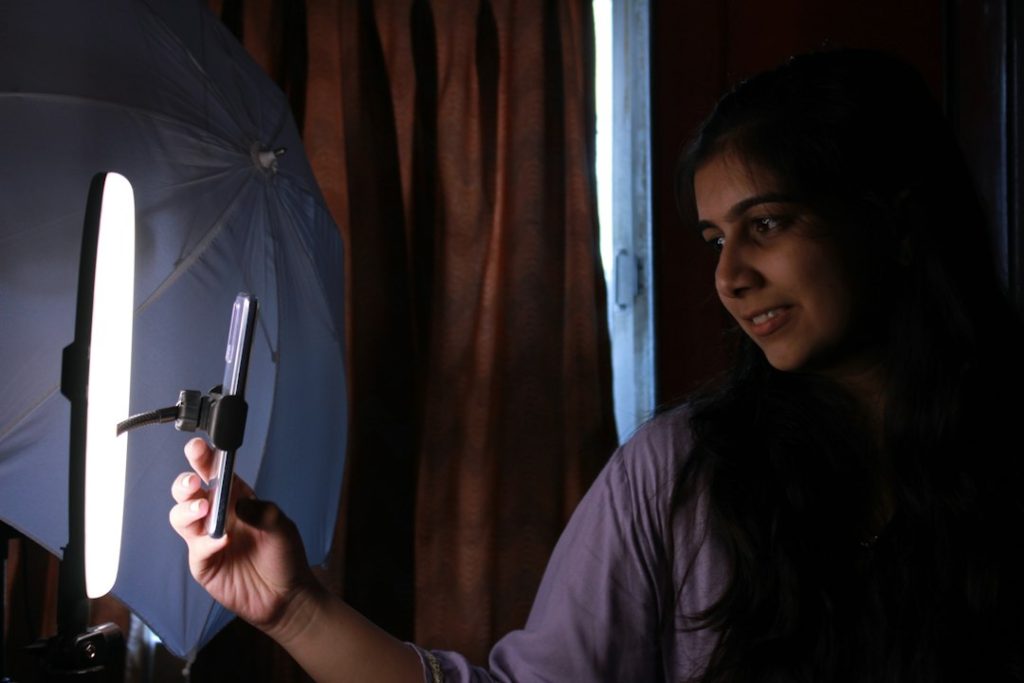
A ring light is characterized by its circular design, with a dense array of LEDs arranged around the perimeter. This configuration creates a unique lighting pattern. The central opening allows the camera or smartphone to be positioned directly in the middle, meaning the light source is equidistant from all sides of the subject’s face. This equidistant illumination is the primary driver behind the signature “halo effect” and the even, shadowless light often associated with ring lights. They typically come in various diameters, with adjustable brightness and often color temperature controls.
The Anatomy of an LED Softbox Panel: Unpacking Its Design
An LED softbox panel, on the other hand, is typically a rectangular or square fixture housing LED lights behind a diffusion material, much like a traditional studio softbox. The key difference lies in the form factor – often more compact and integrated than a full studio setup. The LEDs are usually spread across a larger surface area, and the diffusion material (often a translucent fabric or panel) is designed to significantly soften and spread the light. This leads to a broader, more diffused light source that wraps around the subject, creating a different quality of illumination compared to the direct, circular light of a ring light.
Light Quality: Diffusion, Color Temperature, and CRI Explained
The quality of light produced by any fixture hinges on several factors. Diffusion is paramount; it refers to how effectively the light source’s harshness is softened. Ring lights achieve diffusion through their design and often an added front diffuser, but the light still emanates from a relatively concentrated ring. Softbox panels, with their larger diffusion surfaces, inherently produce softer, more diffused light that wraps more naturally around facial contours. Color Temperature (measured in Kelvin, e.g., 3200K for warm, 5500K for daylight) dictates the color cast of the light, with many modern lights offering adjustable ranges. CRI (Color Rendering Index), particularly CRI95+, indicates how accurately the light source renders colors compared to natural daylight; higher CRI is crucial for true-to-life skin tones.
Flattering Facial Lighting: Which Dominates Your Look?
The ultimate test for any lighting tool is its ability to produce flattering facial illumination. This involves minimizing harsh shadows, rendering skin tones accurately, and creating a visually pleasing aesthetic. Both ring lights and softbox panels have distinct strengths and weaknesses in this regard.
Ring Light’s Signature Look: The “Halo Effect” and Its Impact
The ring light’s circular design directly creates a characteristic “halo effect” in the eyes of the subject. This is a direct reflection of the light source’s shape. For many, this effect is desirable, adding a spark and liveliness to the gaze. However, the light pattern itself, while often shadowless due to its near-equidistant nature, can sometimes flatten features if not positioned carefully. The directness of the light can also, paradoxically, lead to less flattering high-contrast transitions if the diffusion isn’t substantial enough or if the subject is too close.

LED Softbox Panel’s Advantage: Even, Wraparound Illumination
LED softbox panels excel at providing even, wraparound illumination. The larger diffusion surface spreads the light more broadly, minimizing harsh shadows and creating smooth transitions across the face. This characteristic is often preferred for portraiture and professional headshots as it can sculpt features more subtly and render skin with a natural, soft glow. The light wraps around the contours of the face, reducing the appearance of deep shadows under the nose or chin that can sometimes occur with less diffused, more direct light sources.
Analyzing Softness and Diffusion for Portraiture
When it comes to softness and diffusion, LED softbox panels generally have an edge. Their larger diffusion area, coupled with often more substantial diffusion material, breaks up the light more effectively. This results in a larger apparent light source relative to the subject, which is the primary factor in achieving soft light. Ring lights can produce soft light, but the “source” is still fundamentally the ring itself, which can sometimes lead to a more contained or direct quality, especially with smaller ring lights or at greater distances. For portraiture where a gentle, luminous quality is desired, the softbox panel’s design is often superior.
Avoiding Harsh Shadows and Unflattering Tones
Harsh shadows can be a significant detractor from flattering lighting. Ring lights, by their nature, tend to minimize them by illuminating from the front. However, if the ring light is positioned too high or too low, or if the subject’s face is not perpendicular to the light, some shadows can still form. LED softbox panels, with their broader, softer light, are generally more forgiving. They create softer, more gradual shadows that are less likely to appear harsh or unflattering. Their ability to wrap light around the face also helps to even out skin tones and reduce the prominence of minor imperfections.
Capturing the “Catchlight”: Eye Reflection for Livelier Portraits
The “catchlight” – the reflection of the light source in the eye – is crucial for bringing a portrait or video subject to life. It adds sparkle, dimension, and a sense of engagement. Both ring lights and softbox panels create catchlights, but the shape and quality differ.
How Ring Lights Create Distinctive Eye Reflections
The ring light’s defining feature is the distinct circular catchlight it produces. Because the camera is positioned within the ring, the reflection is a perfect circle (or an arc of a circle) mirroring the light source. This is often considered a desirable aesthetic, adding a “sparkle” that many find appealing for social media, vlogging, and general video presence. It’s a clear, identifiable signature of the lighting used.

The Softbox Panel’s Approach to Eye Reflection
An LED softbox panel creates a more diffuse, often rectangular or elongated catchlight. The shape of the reflection mirrors the shape of the softbox and its diffusion material. Instead of a sharp, defined circle, the catchlight is typically softer-edged and may appear as a more natural-looking highlight or a more subtle sheen in the eye. This can contribute to a more generally flattering and less “produced” look, often preferred in more formal portraiture.
Achieving Natural and Expressive Catchlights
Achieving natural and expressive catchlights depends on the light’s quality, the subject’s gaze, and the positioning of both the subject and the light. While ring lights provide a consistent, graphic catchlight, softbox panels offer a more nuanced reflection. The choice here often comes down to personal preference or the desired stylistic outcome. For a vibrant, engaging look, the ring light’s pop is effective. For a softer, more painterly effect, the diffused catchlight of a softbox panel might be preferred. Experimenting with the angle and intensity of either light source is key to maximizing the expressiveness of the catchlight.
Practical Considerations for Remote Work & Content Creation
Beyond light quality, practical factors heavily influence the choice between a ring light and an LED softbox panel, especially for users who move their setups or work in varied environments.
Portability and Setup: Ring Light Convenience vs. Softbox Bulk
Ring lights typically win on portability and ease of setup. They are often lightweight, foldable, and mount directly onto tripods or desk stands. Many are self-contained units. LED softbox panels, especially those designed for studio use, can be bulkier, requiring separate stands and assembly of the softbox itself. However, compact LED panels and smaller, collapsible softboxes are increasingly available, bridging this gap. For frequent travelers or those with limited space, a compact ring light or a small LED panel is usually the more convenient option.
Power Options: Battery vs. AC Power for On-the-Go Use
Both types of lights are available with AC power adapters for mains operation. However, for on-the-go use, battery power becomes critical. Many popular ring lights and LED panels offer built-in rechargeable batteries or compatibility with external power banks (like NP-F style batteries). This is essential for content creators working on location. It’s important to check the battery life and charging options when evaluating portability.
Mounting and Versatility: Adapting to Your Workspace
Ring lights are often designed with integrated mounts for cameras and smartphones, making them ideal for selfie-style shooting or direct-to-camera presentations. Their central design facilitates easy centering. LED panels and softboxes, while often featuring standard tripod mounts, might require more creative positioning to achieve ideal facial illumination without casting shadows from the stand or equipment. Some LED panels offer versatile mounting options like ball heads or articulating arms, increasing their adaptability.
Budget Analysis: Cost-Effectiveness of Each Lighting Type
Entry-level ring lights can be extremely affordable, often available for under $50, making them highly accessible. As features like adjustable color temperature, brightness, and larger sizes are added, prices increase, reaching into the $100-$200 range for premium models. LED softbox panels generally start at a slightly higher price point, with basic small panels around $50-$100, and larger, more professional softbox kits ranging from $150 to several hundred dollars. For basic, everyday video calls, a budget ring light is often the most cost-effective solution. For more demanding photographic or videographic work, investing in a quality softbox panel might offer better value in terms of light quality.
| Feature | Ring Light (Typical) | LED Softbox Panel (Typical) |
|---|---|---|
| Light Quality | Even front light, strong circular catchlight, can sometimes flatten features if not used carefully. | Soft, diffused, wraparound light, natural shadows, excellent for sculpting features. |
| Catchlight Shape | Distinct circular “halo” effect. | Softer, diffused, often rectangular or elongated. |
| Shadows | Minimizes frontal shadows, but can create hard edges if diffusion is insufficient. | Creates soft, gradual shadows, very forgiving. |
| Portability | Generally very portable and easy to set up. | Can be bulkier; compact panels are available. |
| Ease of Use | High, especially for direct camera shots. | Moderate to high, may require more positioning. |
| Price Range (Entry) | $20 – $60 | $50 – $120 |
| Price Range (Mid-Tier) | $70 – $150 | $100 – $250 |
| Price Range (Pro) | $150 – $300+ | $200 – $500+ |
| Ideal Use Cases | Video calls, vlogging, selfies, makeup application. | Portrait photography, product shots, videography requiring soft light, professional interviews. |
Real-World Performance: Who Wins for Specific Use Cases?
The “best” lighting solution is highly dependent on the intended application. Evaluating performance across common scenarios helps clarify which type of light is most suitable.
Best for Zoom Calls and Video Conferencing: Ring Light or Softbox?
For the majority of users primarily concerned with looking good on Zoom, Teams, or other video conferencing platforms, a ring light often takes the crown. Its ease of use, direct illumination, and the flattering, shadowless effect it provides for faces make it ideal. Many ring lights are designed to clip directly onto monitors or sit unobtrusively on a desk. While a small LED panel can also work, the signature frontal illumination and portability of a ring light usually make it the more practical and effective choice for everyday remote work.
Top Choice for Vlogging and YouTube: Ring Light vs. Softbox Panel
This is a closer call and depends on the vlogger’s style. For vloggers who prioritize a bright, engaging look with a distinct eye catchlight, a ring light is excellent. It provides that classic “YouTube look” that many viewers are accustomed to. However, for vloggers aiming for a more cinematic or polished aesthetic, especially those doing product reviews or tutorials where accurate color rendering and soft light are important, a compact LED softbox panel or a small LED panel with a diffusion dome might be a better investment. Some advanced creators even use both, perhaps a softbox for main light and a ring light for fill or eye accent.
Studio Portraiture and Headshots: Which Delivers Superior Results?
In a professional studio setting for portraiture and headshots, the LED softbox panel is the clear winner. Its ability to produce soft, wraparound light that sculpts features, minimizes harsh shadows, and renders skin tones beautifully is paramount. While ring lights can be used as accent lights or for specific stylistic choices, the fundamental quality of light from a well-designed softbox panel is generally considered superior for classic, flattering portraiture. The larger diffusion area allows for greater control and a more pleasing fall-off of light.
Livestreaming Excellence: Balancing Quality and Ease of Use
Livestreaming often requires a balance between high-quality visuals and the ability to maintain energy and engagement without complex setup. A ring light is a strong contender due to its simplicity and the immediate brightening effect it has on the face, making the streamer look more present and professional. However, for streamers who want to elevate their production value, especially those with a dedicated space, a small-to-medium sized LED softbox panel can offer a more sophisticated and pleasing light that is less prone to harshness during long streams. Many modern LED panels offer remote control and app integration, adding to their convenience for live environments.
Troubleshooting Common Lighting Issues: Ring Light vs. Softbox Panel
Even with the right equipment, improper use can lead to common lighting problems. Understanding how to fix them with each type of light is crucial.
Eliminating Glare and Unwanted Reflections
Ring Lights: Glare on glasses can be minimized by adjusting the angle of your head or the ring light itself, or by raising the light source slightly. If the ring itself is too prominent in reflections, consider using a softbox panel.
Softbox Panels: Glare is generally less of an issue due to the softer light. However, strong specular highlights can still occur if the light is too close or too intense. Softening the light further with diffusion or increasing the distance are primary solutions.
Fixing Color Casts and Inconsistent White Balance
Most modern ring lights and LED panels allow for adjustable color temperature (warm to cool). If you notice a color cast (e.g., too yellow or too blue), simply adjust the Kelvin setting until white objects appear neutral. Ensure your camera’s white balance is set correctly to match or is set to auto if it performs reliably. Inconsistent white balance between lights can be resolved by ensuring both lights are set to the same Kelvin value or by using a dedicated white balance card.

Managing Light Intensity for Different Skin Tones
Both ring lights and softbox panels offer brightness controls. For lighter skin tones, lower intensity levels may suffice to avoid overexposure. For darker skin tones, higher intensity levels are often needed to achieve a pleasing exposure and to help reveal subtle facial contours without losing detail in the shadows. The key is to adjust the brightness until the desired effect is achieved, paying attention to both highlights and shadow detail. The quality of diffusion also plays a role; softer light is often more forgiving across a range of skin tones.
Top Ring Lights and LED Softbox Panels to Consider in 2026
The market is flooded with options, but certain models consistently stand out for their performance, features, and value. Here are some top contenders:
Top-Rated Ring Lights for Flattering Facial Lighting
Neewer 18-inch LED Ring Light Kit: A perennial favorite for its balance of size, brightness, and affordability. Often comes with a tripod and phone mount. (Approx. $60 – $90)
Razer Ring Light: Targeted at streamers, it offers high brightness and color accuracy with app control, though at a premium price. (Approx. $100 – $130)
Lume Cube Ring Light: Known for robust build quality and excellent color rendering, suitable for both video and photography. (Approx. $100 – $150)
Leading LED Softbox Panels for Professional Portraits
Aputure Amaran AL-MW Mini LED Light: While not a softbox, this tiny but powerful LED can be diffused for close-up work or used as a powerful accent light. (Approx. $160)
Godox SL-60W LED Video Light (with softbox): A popular choice for its power and versatility. Paired with a Godox SB-BW (bowens mount) softbox, it offers excellent professional-grade light. (Light $100-$130, Softbox $30-$50)
Neewer 10-inch LED Video Light with Softbox: A more budget-friendly option that provides decent diffusion for smaller setups or tabletop photography. (Approx. $70 – $100)
Budget-Friendly Options That Deliver Quality
Viltrox L116T LED Video Light: A compact, affordable LED panel with adjustable brightness and color temperature, great for travel or secondary lighting. (Approx. $40 – $60)
Small, off-brand ring lights (Amazon/eBay): Many generic brands offer basic ring lights with adjustable brightness for under $40. Quality can vary, but they serve the fundamental purpose well for casual users.
High-End Choices for Demanding Content Creators
Aputure Light Dome II / Godox Softbox options with high-CRI LED panels: For ultimate control and professional results, investing in a high-quality LED panel (like Aputure 120D/300D series) paired with a large, well-designed softbox offers unparalleled light shaping capabilities. (Panel $300+, Softbox $70+)
Elgato Key Light Air: Designed specifically for streamers and content creators, offering app control, high brightness, and excellent diffusion in a sleek, modern package. (Approx. $130 – $180 per light)

Ring Light Pros
- Creates a distinctive, flattering halo effect in eyes.
- Minimizes harsh frontal shadows.
- Extremely easy to set up and use.
- Highly portable and compact options available.
- Very affordable entry-level models.
- Ideal for direct-to-camera applications (webcam, phone).
Ring Light Cons
- Can sometimes flatten facial features if not positioned carefully.
- Circular catchlight may not suit all professional portrait styles.
- Diffusion can be less effective than larger softboxes.
- May not provide as much wraparound light as a softbox.
LED Softbox Panel Pros
- Produces soft, diffused, wraparound light.
- Excellent for sculpting facial features and creating natural shadows.
- Higher quality of light for professional portraiture.
- More versatile for various lighting setups (key, fill, rim).
- Often feature high CRI for accurate skin tones.
- Softer catchlights can appear more natural.
LED Softbox Panel Cons
- Can be bulkier and more complex to set up.
- Entry-level models might be more expensive than basic ring lights.
- The characteristic “halo” catchlight is absent.
- Requires more careful positioning to avoid casting shadows from the stand.
👑 Ultimate Winner: Depends on Your Needs
The “Ultimate Winner” between a ring light and an LED softbox panel is entirely dependent on your primary use case and aesthetic preference. For everyday video calls, vlogging, and a bright, engaging presence, the Ring Light offers unparalleled convenience and a flattering, characteristic look. Its affordability and ease of use make it the go-to for most remote workers and casual content creators. However, if your focus is on professional portraiture, high-end videography, or achieving the softest, most sculpted facial lighting, the LED Softbox Panel is the superior choice. Its ability to produce gentle, wraparound illumination and render skin tones with exceptional accuracy makes it indispensable for serious photographers and videographers. Consider your budget, portability needs, and the specific visual style you aim to achieve to make the definitive choice.