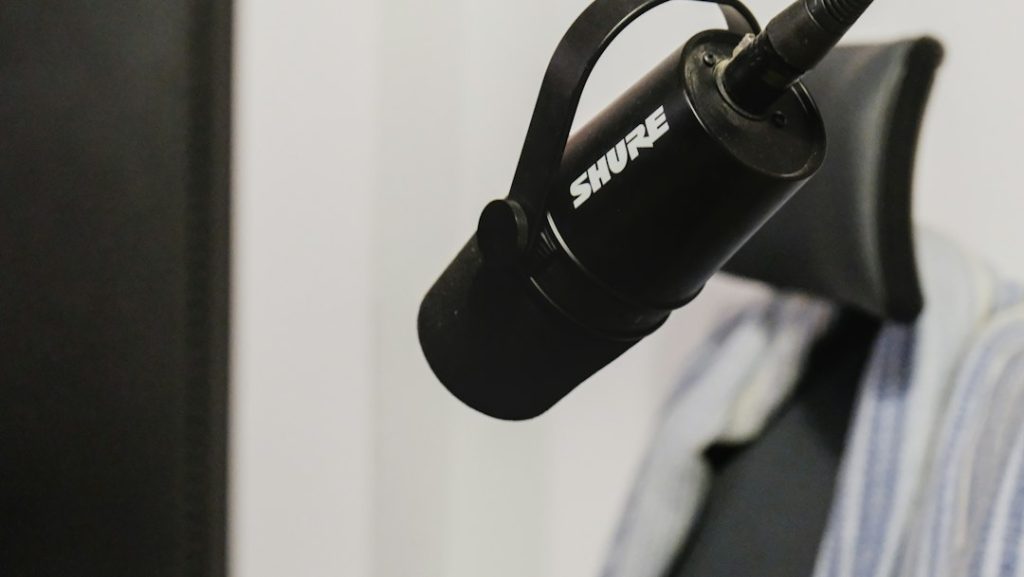
Type: Dynamic
Polar Pattern: Unidirectional (Cardioid)
Frequency Response: 50 Hz to 16,000 Hz
MSRP: $249
👍 Pros
- Superb vocal intelligibility and broadcast-quality sound.
- Hybrid USB/XLR connectivity offers immense flexibility.
- Intuitive touch panel controls for gain, headphone volume, and mic mute.
- Excellent integration with the ShurePlus MOTIV desktop app for advanced control.
- Robust build quality designed for demanding environments.
- Effective isolation from background noise and plosives.
👎 Cons
- Can be more expensive than some entry-level USB mics.
- Touch controls can be overly sensitive for some users.
- Requires software for advanced features and optimal performance.
Quick Look: Shure MV7 – A Podcaster’s New Best Friend
In the crowded landscape of podcasting microphones, the Shure MV7 emerges not just as another option, but as a thoughtfully engineered tool designed to deliver professional-grade audio with remarkable ease of use. Drawing inspiration from its legendary sibling, the SM7B, the MV7 aims to bring that iconic broadcast sound to a wider audience, particularly those leveraging the convenience of USB connectivity. This review delves deep into its capabilities, focusing on its standout speech clarity and the innovative touch panel controls that aim to streamline the recording process.

Design and Build Quality: Rock-Solid Yet Refined
Shure has a reputation for building microphones that can withstand the rigors of professional use, and the MV7 is no exception. The all-metal construction feels substantial and durable, reassuring users that this microphone is built to last. Its compact and professional aesthetic, reminiscent of the SM7B, fits perfectly into any podcasting or streaming setup. The included yoke mount allows for easy positioning on standard mic stands, and the threaded base ensures a secure connection. While it doesn’t come with a dedicated stand, its robust build quality means it pairs well with a variety of boom arms and desk stands, allowing for flexible placement to optimize its cardioid pickup pattern.
Touch Panel Controls: Intuitive and Game-Changing
One of the most lauded features of the Shure MV7 is its touch-sensitive control panel located on the front of the microphone. This panel provides quick and intuitive access to essential functions without needing to reach for your audio interface or software. With a simple tap or swipe, users can adjust microphone gain, monitor mix (the balance between your direct mic signal and playback audio), and headphone volume. A dedicated mute button offers instant silence, crucial for live broadcasting or recording sessions. The panel also features a mic position guide that lights up to indicate the optimal distance for speaking into the microphone, further simplifying the setup process for beginners. While some users might find the touch sensitivity a bit high, leading to accidental adjustments, the overall implementation is sleek and highly functional, reducing the need to break focus from the recording itself.

Unpacking the Sound: Speech Clarity and Audio Performance
At its core, a microphone is judged by its sound, and the Shure MV7 delivers where it matters most: vocal clarity. Engineered as a dynamic microphone, it excels at isolating the voice while rejecting ambient noise, a critical characteristic for podcasting in less-than-ideal acoustic environments. The frequency response is tailored to capture the nuances of spoken word, emphasizing intelligibility and presence without sounding harsh or artificial.
Dynamic Capsule Magic: Capturing Your Voice with Precision
The MV7 utilizes a cardioid polar pattern, meaning it primarily captures sound from the front while significantly reducing sound from the sides and rear. This directional characteristic is key to its ability to minimize background noise, room echo, and unwanted bleed from other sound sources in your recording space. The dynamic capsule itself is designed for high sound pressure level (SPL) handling and produces a warm, rich tone that is flattering to most voices. Its inherent low self-noise further contributes to a clean signal, allowing for significant gain boost without introducing excessive hiss.
USB vs. XLR: Flexibility for Every Workflow
The MV7’s dual connectivity is a major selling point. The USB connection offers plug-and-play simplicity, making it accessible for beginners and those using computers without dedicated audio interfaces. It connects directly via USB-C to USB-A or USB-C ports. For users seeking even greater control or looking to integrate with professional audio equipment, the XLR output provides a traditional analog connection. This hybrid approach means the MV7 can grow with a user’s setup, offering a clear upgrade path from USB-only operation to a full XLR interface or mixer setup without needing to replace the microphone itself.
Real-World Audio Tests: Podcasting, Streaming, and Voiceovers
In practical application, the Shure MV7 consistently produces impressive results. For podcasting, voice recordings are clear, present, and well-defined, cutting through a mix with ease. The plosive (P, B sounds) and sibilant (S sounds) handling is excellent, thanks to the carefully designed capsule and pop filter grille. When streaming, the microphone’s ability to reject background noise means viewers hear the caster’s voice clearly, even in noisy home environments. For voiceover work, the microphone provides a professional, broadcast-ready tone that requires minimal post-processing. The proximity effect, where bass frequencies increase as the mic gets closer to the source, is present and can be used creatively, but it’s generally well-controlled and doesn’t muddy the vocal.

ShurePlus MOTIV App Integration: Taking Control
While the MV7 is perfectly functional out of the box using its USB connection, unlocking its full potential requires the ShurePlus MOTIV desktop application. This software suite transforms the MV7 from a great microphone into a powerful audio toolkit.
EQ, Compression, and Limiting: Shaping Your Sound
The MOTIV app provides access to essential audio processing tools directly within your recording software. Users can apply equalization (EQ) to fine-tune the tonal balance of their voice, compression to even out dynamic range, and limiting to prevent clipping. These tools allow for significant sound shaping, enabling users to achieve a polished, professional sound tailored to their specific voice and content style. The ability to save custom presets within the app means you can quickly recall your preferred settings for different recording scenarios.
Auto Level Mode: Effortless Consistency
For users who want professional sound without deep diving into audio engineering, the Auto Level Mode is a revelation. Simply enable this mode in the MOTIV app, and the microphone automatically adjusts gain and compression in real-time to maintain a consistent output level, regardless of distance or speaking volume. This feature is incredibly beneficial for podcasters, streamers, and content creators who prioritize consistency and want to minimize the risk of audio level fluctuations.
Monitoring and Mute Functionality
The MV7 features a 3.5mm headphone jack for zero-latency monitoring, allowing you to hear your voice directly from the microphone without any distracting delay. The headphone mix control, accessible via the touch panel or the MOTIV app, lets you balance the level of your microphone input with the playback audio from your computer. The mute function, both on the touch panel and within the software, is quick and reliable, ensuring you can instantly cut the mic feed when needed.

Shure MV7 vs. Competitors: Where Does It Stand?
The Shure MV7 operates in a competitive space, often compared to other popular USB and hybrid microphones. Its unique blend of professional sound, robust build, and smart features positions it strongly.
Shure MV7 vs. Rode NT-USB+
The Rode NT-USB+ is another excellent USB microphone known for its clear sound. However, the MV7 offers the significant advantage of XLR connectivity, providing a more flexible upgrade path. The MV7’s dynamic nature also makes it inherently better at rejecting background noise compared to the NT-USB+’s condenser capsule, which is more sensitive to room acoustics.
Shure MV7 vs. Blue Yeti X
The Blue Yeti X is a versatile USB microphone with multiple pickup patterns and user-friendly controls. While the Yeti X offers more pattern options, the MV7’s cardioid-only focus is often more practical for solo podcasters and streamers. The MV7’s audio quality, particularly in terms of vocal presence and intelligibility, is generally considered superior, and its hybrid USB/XLR design provides greater long-term flexibility.
Shure MV7 vs. Samson Q2U
The Samson Q2U is a popular entry-level option that also features both USB and XLR connections. It’s a strong contender for budget-conscious creators. However, the Shure MV7 surpasses the Q2U in terms of build quality, overall audio fidelity, and the sophistication of its software features. The MV7 offers a more refined and professional sound profile that justifies its higher price point for serious content creators.
The Shure MV7 is a dynamic microphone, inherently suited for untreated rooms due to its directional cardioid pattern and lower sensitivity to ambient noise compared to condenser microphones like the Blue Yeti X. Its frequency response is optimized for vocal intelligibility, prioritizing the 2-6 kHz range critical for speech clarity. While the touch controls offer convenience, user feedback suggests they can be sensitive; however, the ShurePlus MOTIV app provides robust software control, including Auto Level Mode, which has been widely praised for simplifying audio consistency. The dual USB/XLR connectivity ensures future-proofing and integration with professional audio setups, a significant advantage over many USB-only competitors. Pricing places it in the mid-to-high range for USB microphones, reflecting its professional-grade components and Shure’s brand reputation.
Common User Scenarios and Solutions
The Shure MV7 is designed to be versatile, but like any piece of audio equipment, understanding its nuances can help users achieve the best possible results.
Tackling Room Echo and Background Noise
Even with its excellent noise rejection, the MV7 performs best in reasonably quiet environments. For untreated rooms with noticeable echo, positioning the microphone correctly (closer to the sound source) is crucial. Using the cardioid pattern effectively means speaking directly into the front of the microphone. Acoustic treatments like foam panels, heavy curtains, or even a simple portable vocal booth can further improve isolation. The ShurePlus MOTIV app’s ‘Dark’ or ‘Natural’ Voice Isolation settings in the Voice Premier tool can also help mitigate room sound.
Optimizing Touch Panel Settings for Your Environment
The sensitivity of the touch panel can be adjusted within the ShurePlus MOTIV app. If you find yourself accidentally muting the mic or changing levels, reducing the touch sensitivity in the app settings can alleviate this. Experimenting with the LED brightness of the touch panel can also help, as a brighter light might make it easier to see touch zones, potentially reducing accidental activation.
Achieving Peak Speech Clarity in Diverse Setups
Beyond the microphone itself, achieving peak speech clarity involves several factors. Ensure the microphone is positioned correctly – typically 4-10 inches from the mouth, angled slightly towards the speaker. Utilize the “Mic Position Finder” in the MOTIV app. Experiment with the “Near” and “Far” voice pickup settings in the app; “Near” enhances proximity effect for a closer, more intimate sound, while “Far” captures a bit more room ambiance and can sound more natural for some voices. The EQ presets in the MOTIV app, particularly those labeled “Clarity” or “Presence,” are invaluable for boosting vocal intelligibility.
Final Verdict: Is the Shure MV7 Worth the Investment for Your Podcast?
The Shure MV7 is a compelling package that successfully bridges the gap between user-friendly USB microphones and professional XLR setups. Its exceptional speech clarity, robust build, intuitive touch controls, and powerful software integration make it an outstanding choice for podcasters, streamers, voiceover artists, and anyone prioritizing vocal quality. While it comes at a higher price point than many entry-level USB microphones, the investment is justified by its performance, versatility, and the ability to grow with your audio setup. If you’re serious about achieving broadcast-quality sound without the complexities of a full XLR setup, or if you want a reliable mic that offers an upgrade path, the Shure MV7 stands out as one of the best options available.